
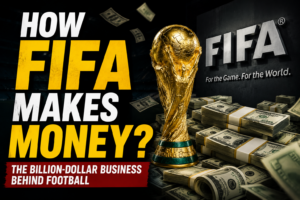
Do you know that every four years, billions of people stop what they’re doing to watch the FIFA World Cup? But nobody knows how FIFA makes money to host the tournament.
Many fans fill up stadiums, televisions are switched on across every continent, and social media explodes with celebrations, debates, and unforgettable moments.
But while the world focuses on the football, something much bigger is happening behind the scenes.
The FIFA World Cup is not just the biggest sporting event on the planet; it’s also one of the most profitable.
That raises an interesting question:
How does FIFA make so much money?
Do ticket sales account for most of its income?
Are sponsors responsible for the billions?
Or is television the real goldmine?
The answer is a combination of several revenue streams that together make FIFA one of the wealthiest sporting organizations in the world.
Let’s take a closer look.
Quick Facts
Category | Details |
FIFA Revenue Cycle | Four Years |
Biggest Revenue Source | Media & Broadcasting Rights |
Largest Event | FIFA World Cup |
2026 Tournament Hosts | USA, Canada & Mexico |
Main Revenue Streams | Broadcasting, Sponsorship, Licensing, Hospitality & Ticket Sales |
The FIFA World Cup is the organization’s largest commercial asset, generating the majority of FIFA’s income during each four-year cycle.
ALSO READ: How Much Do World Cup Winners Earn? FIFA Prize Money
Why Does FIFA Make So Much Money?
The answer is simple.
The FIFA World Cup is watched almost everywhere on Earth.
Broadcasters compete for the rights to show matches.
Global companies pay enormous amounts to associate their brands with football’s biggest event.
Millions of fans buy tickets, official merchandise, and hospitality packages.
Every one of these activities generates revenue for FIFA.
Unlike football clubs, FIFA doesn’t play matches every week.
Instead, it earns a huge sum from a handful of global competitions, with the World Cup leading the way.
1. Broadcasting Rights — FIFA’s Biggest Cash Machine
If there’s one reason FIFA earns billions, it’s television.
Broadcasters from around the world pay huge licensing fees for the right to air World Cup matches. This is a big reason why we could watch the tournament from anywhere.
These broadcasters then recover their investment by selling advertising during games that attract millions of viewers.
For FIFA, this is by far its largest source of income.
Without broadcasting deals, the World Cup wouldn’t generate anywhere near its current revenue.
2. Sponsorship Deals
The world’s biggest brands all want one thing:
Visibility during the World Cup.
Companies such as Coca-Cola, Adidas, Visa, Hyundai, and other global partners spend hundreds of millions of dollars to become official FIFA sponsors.
In return, they receive:
- Worldwide brand exposure.
- Exclusive marketing rights.
- Stadium advertising.
- Digital campaigns.
- Product placement.
- Hospitality opportunities.
These partnerships form another major pillar of FIFA’s business model.
3. Ticket Sales
Every World Cup attracts millions of ticket applications.
Fans travel from every corner of the globe hoping to witness history.
Ticket sales generate good income, particularly during the knockout stages and the final, where demand is highest.
Although ticket revenue is substantial, it still represents a smaller share of FIFA’s overall earnings than broadcasting and sponsorships.
4. Hospitality Packages
Not every fan watches from the regular stands.
Businesses, celebrities, and VIP guests often purchase premium hospitality packages.
These include:
- Luxury seating.
- Gourmet dining.
- Exclusive lounges.
- Networking opportunities.
- Premium stadium experiences.
These packages cost far more than standard match tickets and contribute another valuable stream of revenue.
5. Licensing and Merchandise
Every official World Cup football
Every licensed jersey
Every video game partnership
Every collectible sticker album…
They all generate licensing income.
Rather than manufacturing these products itself, FIFA licenses its intellectual property to trusted companies and earns royalties on sales worldwide.
It’s a business model that continues generating revenue long after the final whistle.
6. Digital Media and Commercial Partnerships
Football is no longer limited to television.
Millions of fans now engage through:
- Official FIFA apps.
- Streaming platforms.
- Social media.
- Fantasy football games.
- Digital advertising.
- Branded online content.
As digital audiences continue to grow, this area is becoming increasingly valuable for FIFA and its commercial partners.
Where Does FIFA Spend the Money?
Many people assume FIFA simply keeps its profits.
In reality, a large portion of its income is reinvested into football.
Funds are used for:
- World Cup prize money.
- Women’s football development.
- Youth competitions.
- Referee education.
- Member association funding.
- Grassroots football programs.
- Infrastructure development.
This redistribution is one of FIFA’s core responsibilities as the global governing body for football.
The World Cup Is FIFA’s Biggest Business
It’s easy to think of the World Cup as just another tournament.
In reality, it’s the engine that powers FIFA’s finances.
The success of one World Cup helps fund football development around the world for years afterward.
Without the tournament, FIFA’s financial model would look completely different.
Did You Know?
The FIFA World Cup is one of the most watched sporting events on Earth, attracting billions of viewers across television and digital platforms. That global audience is the main reason broadcasters and sponsors are willing to pay such enormous sums for commercial rights.
People Also Ask
What is FIFA’s biggest source of income?
Broadcasting rights are FIFA’s largest source of revenue. Television networks pay billions of dollars to secure the rights to broadcast World Cup matches around the world.
Does FIFA own the World Cup?
Yes. FIFA owns and organizes the FIFA World Cup and manages its commercial rights, including broadcasting, sponsorship, licensing, and merchandising.
Does FIFA make money from ticket sales?
Yes. Ticket sales contribute significant revenue, although they generate less income than broadcasting rights and sponsorship agreements.
Who owns FIFA?
FIFA is not privately owned. It is an international, non-profit governing organization made up of national football associations from around the world.
Does FIFA pay taxes?
As an international governing body, FIFA’s tax obligations vary depending on the country, host agreements, and applicable legal frameworks for each competition.
Key Takeaways
- Broadcasting rights are FIFA’s largest revenue source.
- Sponsorship deals generate hundreds of millions of dollars.
- Ticket sales and hospitality packages contribute significant income.
- Licensing official World Cup products creates long-term revenue.
- Much of FIFA’s income is reinvested into football development worldwide.
Final Thoughts
The FIFA World Cup is much more than ninety minutes of football.
Behind every match is a global business ecosystem involving broadcasters, sponsors, host nations, merchandise, digital media, and billions of passionate fans.
Understanding how FIFA makes money helps explain why the World Cup continues to grow in scale, prize money, and global influence with every edition.
Continue Reading
How Much Do World Cup Winners Earn? FIFA Prize Money
How Much Do FIFA World Cup Referees Get Paid?
How Much Do USA Soccer Players Earn? Full USMNT Salary Breakdown
Which Country Has Won the Most FIFA World Cups?
Question for our readers: Which FIFA revenue stream surprised you the most broadcasting rights, sponsorships, or merchandise? Let us know in the comments below.